
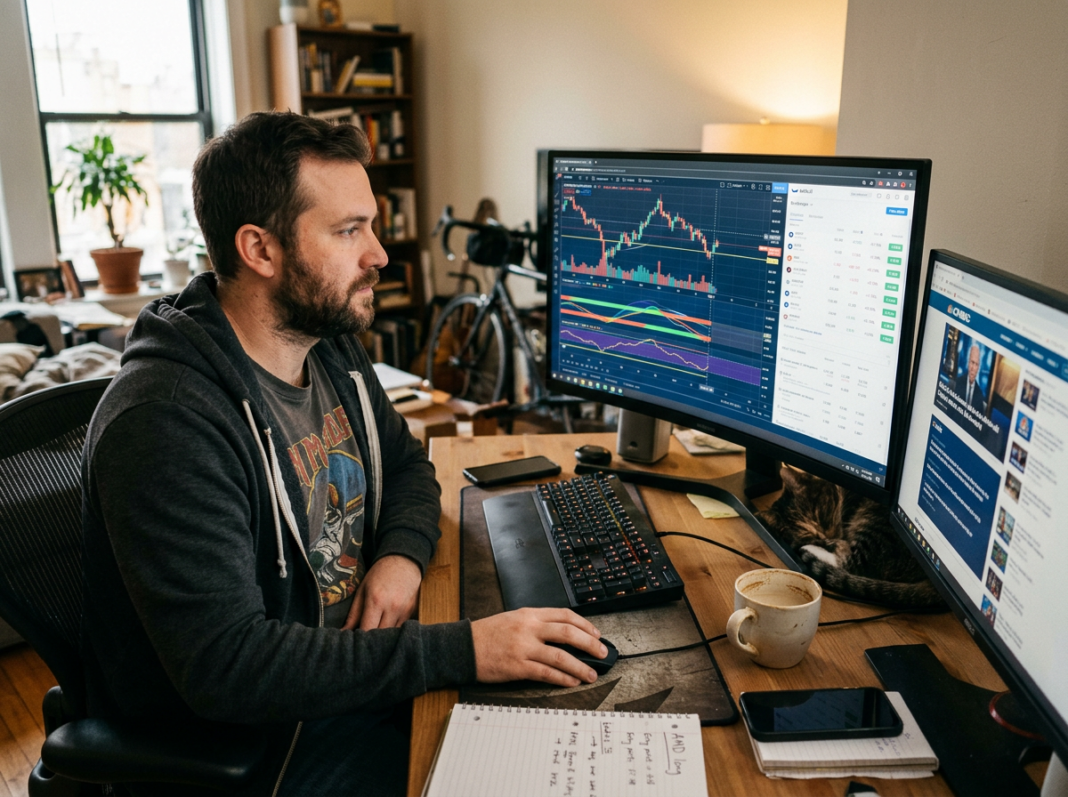
Not long ago, the idea of managing your own investments or placing your own trades felt out of reach for most people.
The financial markets were largely seen as the domain of banks, institutions and professional investors. The average person might contribute to a pension, put money into a savings account or rely on a financial adviser, but actively participating in the markets wasn’t part of everyday life.
Today, that picture looks very different.
Millions of people around the world now invest, trade and build portfolios using little more than a smartphone and an internet connection. They’re teachers, builders, nurses, engineers, business owners, students and retirees. Some invest for the long term. Others trade stocks, forex or cryptocurrencies. Many simply want to better understand how money works and take greater ownership of their financial future.
“Different approaches. One shared ambition: greater control.”
This transformation didn’t happen overnight. Instead, it was driven by several changes that arrived at almost the same time.
Technology opened the doors
Technology removed many of the barriers that once kept people on the sidelines. Opening a brokerage account, which once involved paperwork and lengthy processes, can now take minutes. Market data, charting platforms and educational resources that were once expensive or difficult to access are now available to almost anyone with an internet connection.
Information went mainstream
At the same time, the way people learn has changed. A generation ago, financial information was largely filtered through newspapers, television and specialist publications. Today, books, podcasts, newsletters, online communities and video platforms allow people to explore markets in ways that simply weren’t possible before. Not every source is reliable, but access to information has become far more widespread.
Economic Pressure played a role
Economic conditions have also played their part. Years of low interest rates, rising living costs and greater awareness of retirement planning have encouraged many people to think differently about their money. For some, investing offers the opportunity to build long-term wealth. For others, trading has become a skill they want to understand, even if they never pursue it professionally. More than anything, people increasingly want to play an active role in decisions that affect their financial future.
Cultural Shift
Perhaps the biggest shift, however, has been cultural.
Conversations about investing are no longer confined to the financial pages. Younger generations have grown up hearing about index funds, ETFs, compounding and financial independence alongside discussions about careers, entrepreneurship and technology. Understanding money is no longer seen as a specialist interest. For many, it’s becoming an essential life skill.
Of course, greater participation doesn’t guarantee better outcomes.
Markets remain challenging. Success requires patience, discipline and continual learning. Many people discover that managing emotions can be just as difficult as understanding a chart. Others learn the hard way that shortcuts, unrealistic promises and online hype rarely lead to lasting results.
That’s why balanced information, thoughtful reporting and trusted communities matter. Not because they can remove risk, nothing can, but because they help people make more informed decisions. The goal isn’t to eliminate uncertainty. It’s to better understand it.
Looking ahead, retail participation is likely to continue evolving. New technology may make information more accessible, educational tools are likely to become more sophisticated and investing could become even more closely connected to everyday financial planning. As the industry matures, more people may move seamlessly between saving, investing and trading as their goals and circumstances change.
Yet perhaps the most important change has nothing to do with technology at all. It’s a change in mindset.
The rise of the retail trader isn’t simply a story about financial markets. It’s about people choosing to become active participants rather than passive observers. It’s about recognising that financial knowledge is no longer reserved for professionals and that understanding money is a skill worth developing throughout life.
Markets will continue to evolve. New platforms will emerge. Different investment products will come and go. But one thing seems increasingly clear. More people than ever want to understand the systems that shape their financial future.
And that story is only just beginning.
